Ekphrasis
Four songs that walk into a work of art and refuse to leave.
The Song Stands Before the Canvas
Ekphrasis is the old word for it — writing that stands in front of a work of art and refuses to stay quiet. A poem about a painting; a voice that answers the image back. Four songs, four works, four centuries of making the eye stop.
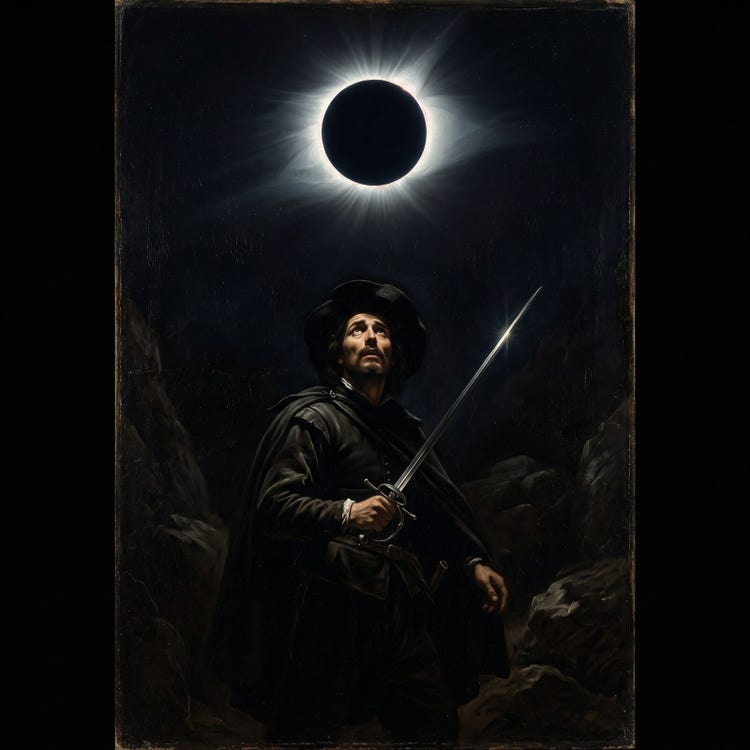
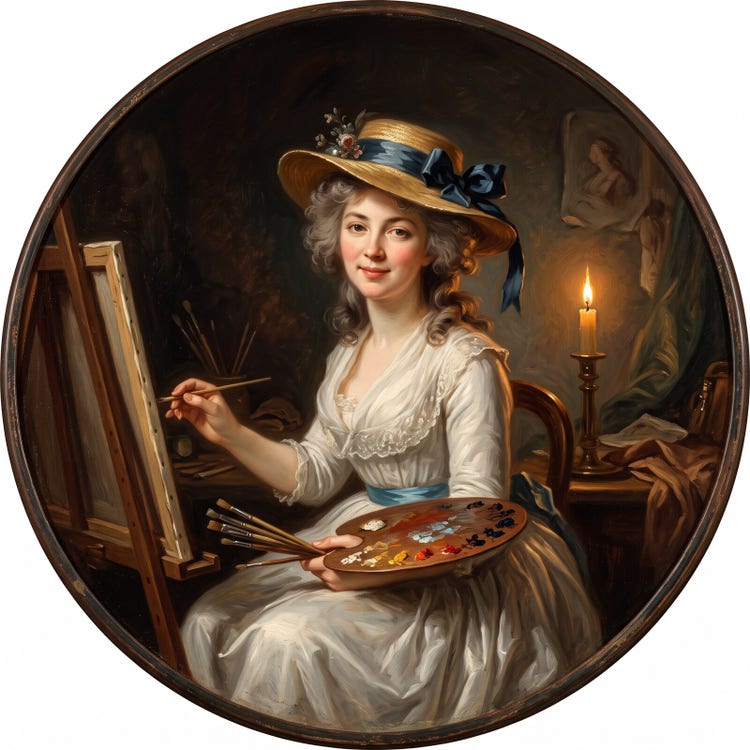
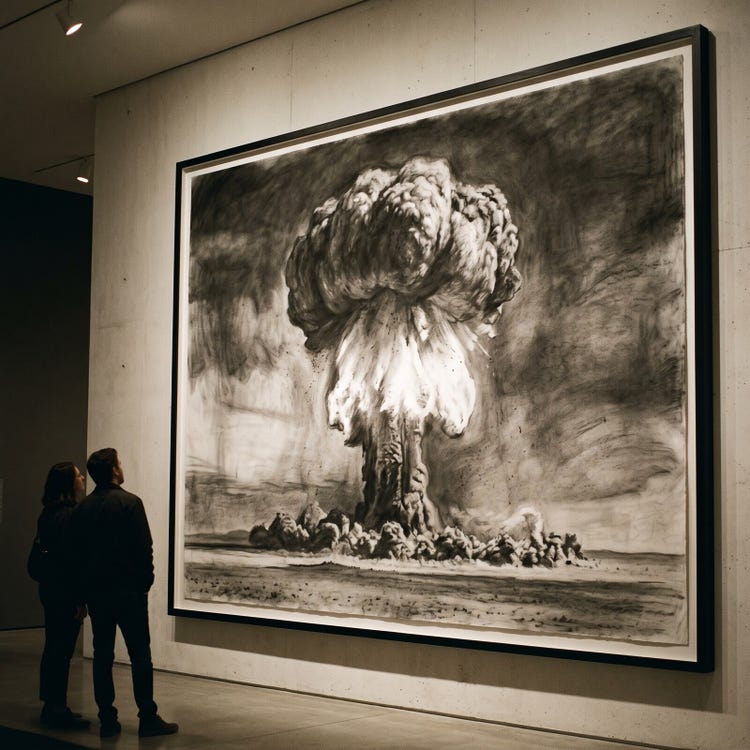
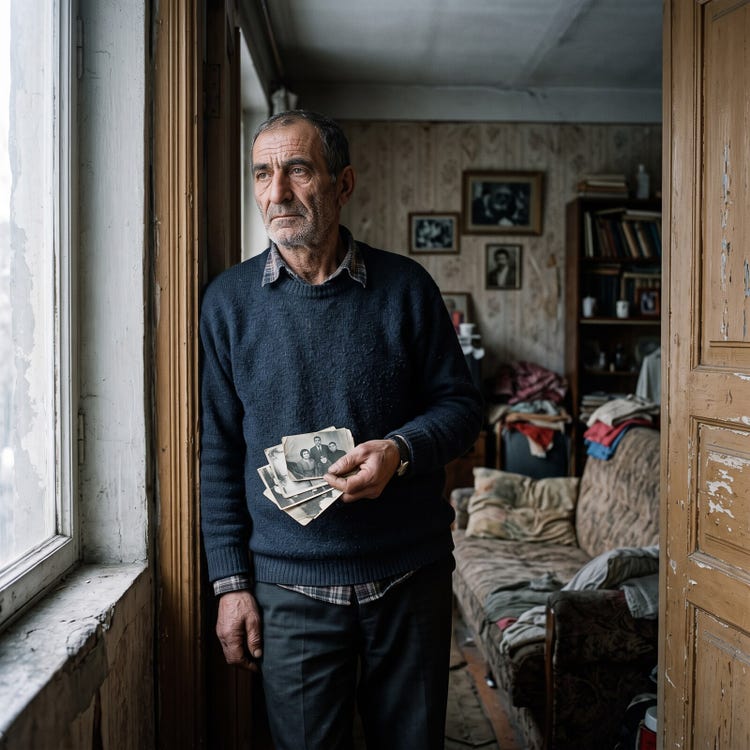
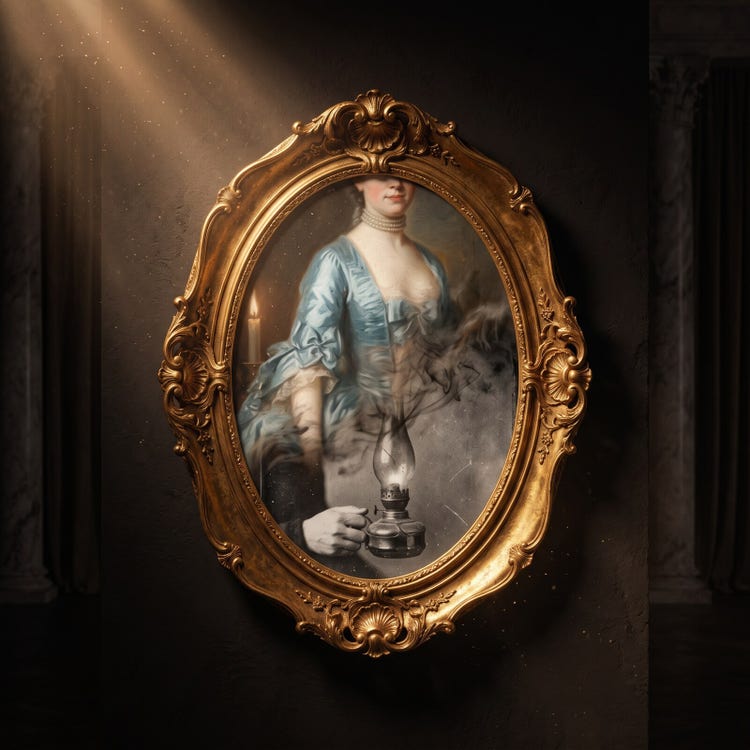
Itzik Kagan opens in front of Caravaggio — Midnight Noon chases the brawler who built a whole century out of a single shaft of light, and the other totality with it: the sun gone black at noon. (The next one is 12 August 2026, and it can't come fast enough.) Sylvaine Éternelle sings Élisabeth Vigée Le Brun — one of only four women the Académie let through the door, six hundred faces painted by candlelight, her light carried out through the snow when the Revolution came for it. Itzik returns for Robert Longo's wall-sized charcoal storms, The Sickness of Reason, and finds the Akedah underneath: the burnt offering, the son bound on the wood, the angel who never came. Dmitri Volkov walks into Diana Markosian's Father — the film a daughter built from the parent she hadn't seen in fifteen years — and sings it back from the empty side of the ocean.
A painting, a portrait, a drawing, a photograph. Baroque to now. Play it front to back — the art is the argument.